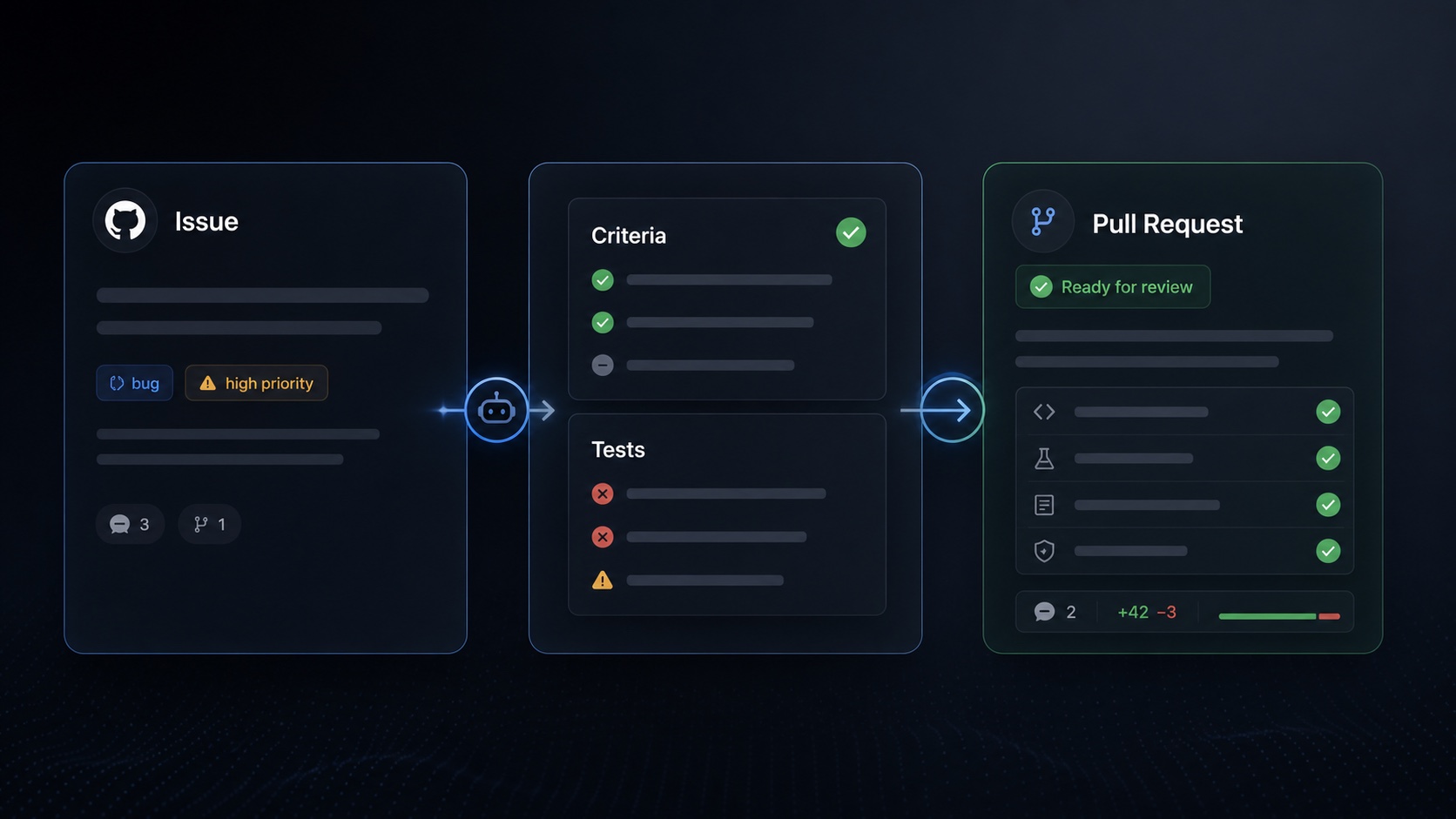
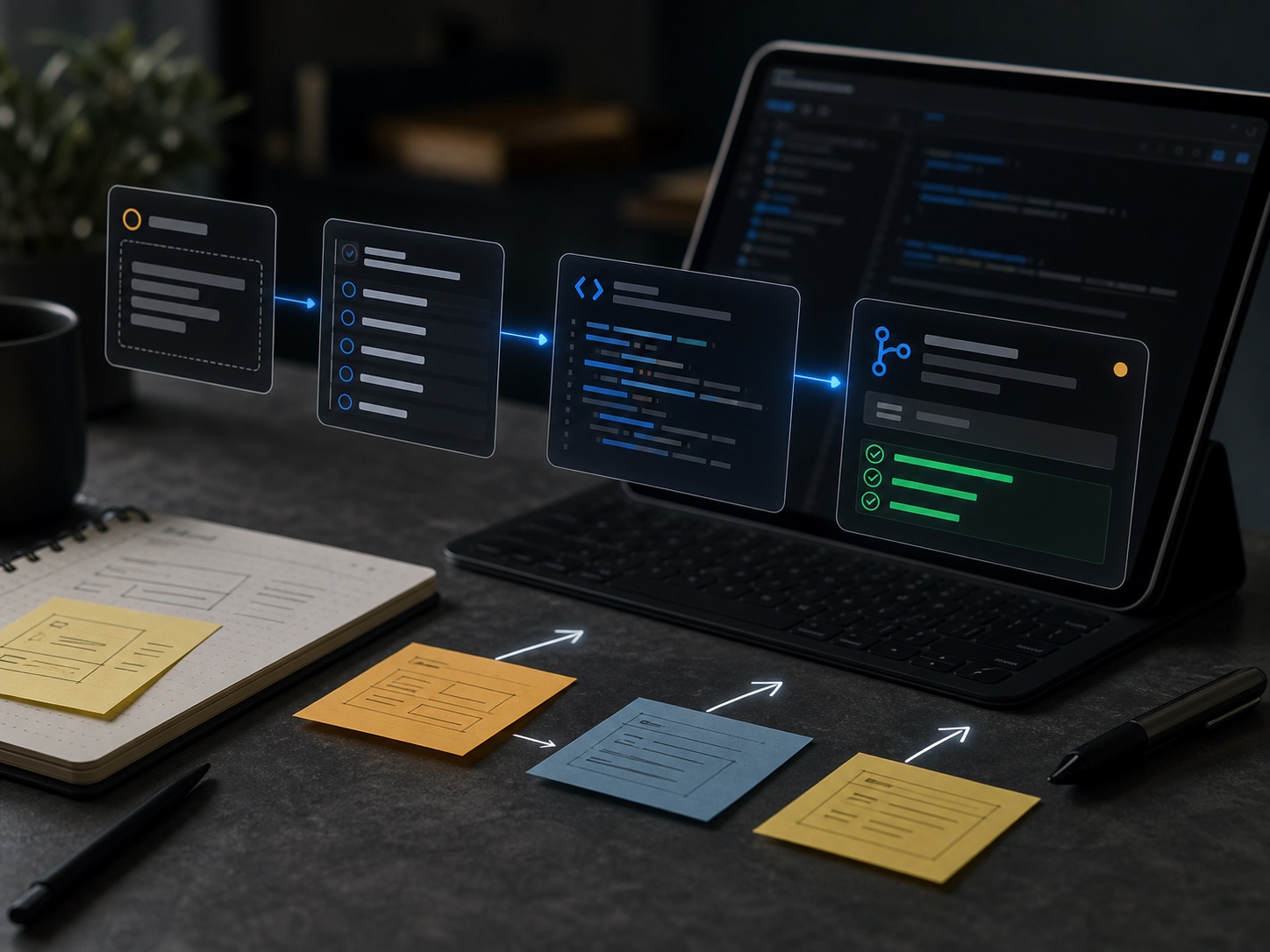
What is ticket-to-PR automation?
Ticket-to-PR automation is a workflow where a software ticket is turned into acceptance criteria, tests, implementation commits, and a pull request for human review in the normal Git and CI process.
How does a ticket-to-PR AI agent write code from tickets?
A ticket-to-PR AI agent reads the ticket, clarifies ambiguous requirements, drafts acceptance criteria, inspects the repository, writes failing tests, implements the change on a branch, runs checks, and opens a pull request with review context.
Are AI-generated pull requests merged automatically?
Specship is designed around normal review controls. AI-generated pull requests can be reviewed, redirected, or rejected by humans, and merge behavior should follow the repository policies your team already trusts.
When should teams avoid ticket-to-PR AI?
Teams should avoid ticket-to-PR AI for vague strategy work, high-risk security changes without close review, undocumented legacy systems, production incidents that require live operator judgment, and changes where the desired behavior cannot be tested.
Can a ticket-to-PR AI agent keep working while I am away?
Specship is designed for continuous backlog execution: users can create tickets on the fly and the system can keep working through queued tasks while respecting dependency order, budget caps, tests, repository policy, and review gates.
How is ticket-to-PR AI different from an IDE coding assistant?
An IDE coding assistant helps a developer during an interactive coding session. A ticket-to-PR AI agent starts from a ticket, prepares criteria and tests, implements asynchronously, and opens a pull request for review.
Does Specship work with ClickUp, GitHub Issues, Linear, and Jira tickets?
Specship has native ClickUp integration in private beta and pages for GitHub Issues, Linear, and Jira ticket-to-PR workflows. Native integrations and MCP-based adapters are the intended direction.